Showing posts with label trials. Show all posts

Tuesday, 8 June 2010

Oca / Sweetcorn Bicrop

Various sources state that this is a traditional Andean cultural method, but I cannot find any description of the specific planting patterns used.  They may well have used alternate widely-spaced rows of earthed-up Oca with later-planted corn. But I think corn pollination might suffer from the wide spacing, and the unnecessary soil disturbance and labour does not appeal to me.
I want a method that will suit my no-dig 4ft wide beds, and I think block-planted corn with oca near the centre-line of the bed is going to be the most practical approach for me.

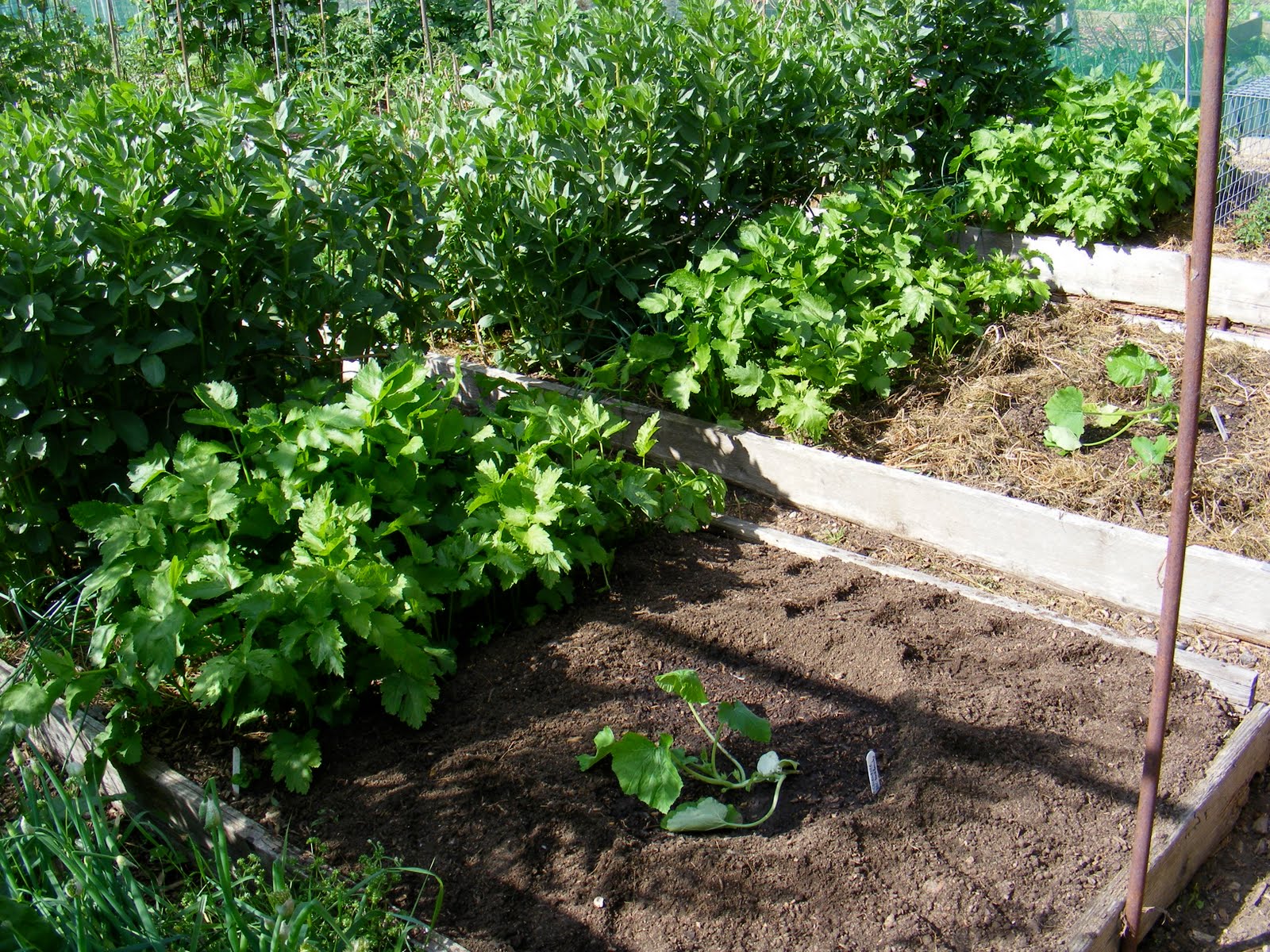
Back on the 25th April the preceding crop of grazing rye was hoed off and removed (for strawing strawberries). Small pot-grown Oca were planted out on the same day.

By the 17th May (below) the Oca are established, but looking very lonely. I never like to see bare soil at the best of times, but continuing cool weather has meant the delayed planting of corn, and the Oca have been on their own for longer than expected. I should have left some of the grazing rye crop-debris on the surface to shade my precious humus and reduce surface evaporation.

Spacing for the corn is the tricky bit. I have a theory that if I can get the corn to support the Oca in an upright position, reducing stem contact with the ground, and thus reducing stem tuber formation, the plants will  be forced to concentrate all of their energy into bigger tubers around the roots (see Tubers- big and few, or small and many), and Oca - Be Erect not Supine!). The corn will have to be reasonably close-planted to do this, but must be far enough apart to admit light to the Oca - a fine balance.

6th of June, the sweetcorn are ready to go...
...and are spaced on a grid of about 1ft across the bed and slightly more along the bed. The Oca sit on the same grid so that each is surrounded by four corn. Just visible are beetroot plugs added along the edges of the bed to complete a three-way polyculture, and utilise the extra light available at the sides.

Plants watered in, paths mulched, there should be no more work until harvest.

Just one week later (13th June), all three crops are putting on amazingly fast growth. Notice the unusually early Oca flower
By the 20th of June, just 14 days after planting the corn, the canopy is about to close. So far, the spacing seems to be working just right, and the weeds won't get a look in.
4th July (4 weeks after planting corn) Stand well back everyone!
Keeping a log with photos and dates really highlights how quickly crops grow in midsummer. The Cylindra beetroot are already of a useable size, the corn is waist high, and the Oca foliage is relentlessly advancing towards the edges of the bed.
We've had consistently hot sunny conditions for the last few weeks, and I think the Oca is probably benefiting from the partial shading of the corn.

23rd July. The corn is above head height and showing signs of flowering. Some beetroot have already been harvested, and the Oca is giving full ground cover to the bed.
Weed suppression is absolute.
With the continuing drought, I've been forced to water a few times, and strong winds flattened some of the corn, so they have been staked, but otherwise the bed has looked after itself just fine.


20th August. The corn is cropping. It's averaging two good-sized cobs per plant, so six per linear foot of bed. The beetroot have all been eaten.


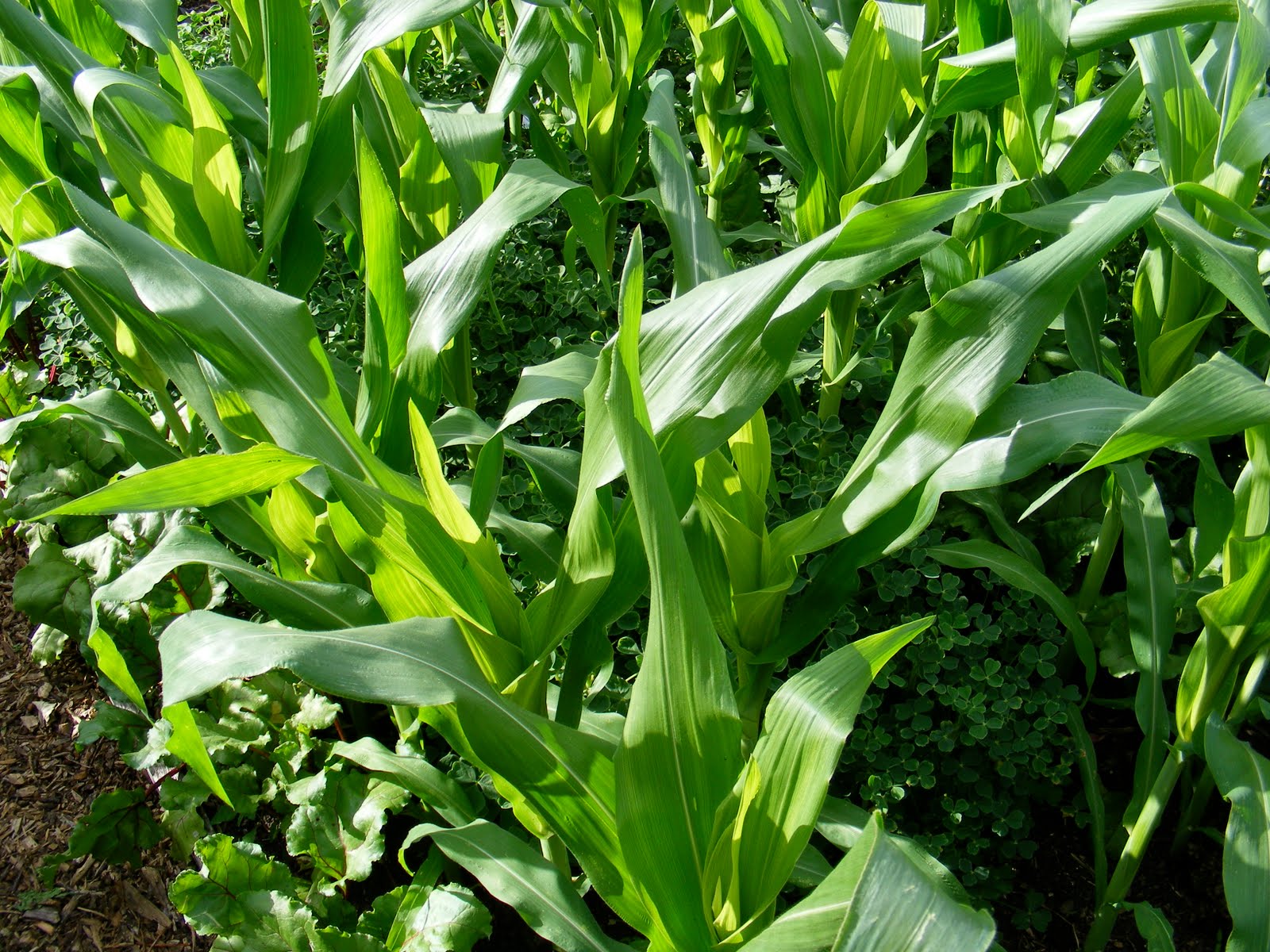


14th September. The corn has all been harvested, and the plants cut back to admit more light to the Oca during the shortening days.


Update, 2010 Oca harvest here.

Tuesday, 9 March 2010

Oca Post-crop Allelopathy Trial

There have been suggestions that Oca may have an allelopathic effect on following crops, and there is evidence that allelopathic chemicals are produced by Oca roots and decaying Oca leaves. More details in my Oh-oh! Oca Allelopathy! post.
But there currently seems to be no published information on Oca's allelopathic affects in real-life gardening – how significant they are, and which crops are effected.

Allelopathy can be 'in-crop' (while the allelopathic crop is growing), or 'post crop' (when the breakdown of dead leaves, roots or their associated rhisosphere releases inhibiting chemicals into the soil). Oca may use either or both of these forms of chemical warfare, but this trial focuses on post-crop effect.

Here is the plan: I'll shift my usual vegetable row orientation by ninety degrees, so that crops run across three beds:

Bed 1. (nearest) Previously used for the Oca/cordon tomato trial. This will be examined for the purported allelopathic effect of Oca.
Bed 2. (middle) Previously used for overwintered Hungarian grazing rye (expected allelopathic effect caused by grazing rye).
Bed 3. (far) Previously used for overwintered brassicas (control. No expected allelopathic effect).

The crops will be the usual common garden vegetables – those that I would normally be growing, sown at the time I would normally sow them. Some will be direct-sown, others will be module-grown transplants. In fact I will do exactly what I would normally do, but east-west instead of north-south. Individual crops are detailed at the bottom of the page.
All three beds have a similar cultivation and fertilising history.

Observations.
1. Plants in bed 1 (previously growing oca) were not observed to be generally slower germinating, smaller, or less productive  than those on the control bed. Even the potatoes with artificially concentrated amounts of oca crop-debris added to their trench were not inhibited, and in fact were if anything larger and better yielding by the time they were lifted.
2. Plants in bed 2 showed no obvious difference in seed germination despite the well-accepted allelopathic properties of the closely preceding grazing rye.
3. Some crops in bed 3 (control) suffered considerably more from slug damage. Other insect pests (notably flee beetle and pea & bean weevil) seemed to effect all beds equally.
4. Weed and volunteer levels and species were similar on all beds.

Conclusions and speculations.
1. I can't see any general detrimental effect to following crops, and do not intend to allow for it in future planting schemes.
2. Surprisingly, the allelopathic effect of Hungarian grazing rye was not apparent, and I will modify my green manuring practices accordingly.
3. My soil type (heavy clay with high levels of organic matter) may be less affected by allelopathic chemicals in some way. For example, organic matter might act to buffer these chemicals, or the high surface area of clay particles might reduce their mobility in the soil. I'm definitely not an expert on soil chemistry, but different soils would very possibly behave differently.
4. Oca's chemical exudates have been shown elsewhere to be insecticidal, and this could explain the lower levels of damage from soil-dwelling insect pests compared with bed 3. An alternative reason could be that bed 3 was netted to protect the previous brassica crop for most of the Winter. With reduced access to birds, slug population would probably be higher.
5. This year's late Spring gave a longer-than-usual interval between lifting the Oca crop, and sowing the Spring-sown crops. This has given more time for any chemical exudates to break down or be leached from the topsoil.

Above, the view from bed three, 23/5/10


Individual trials are listed below:


Trial 1.  Early potato, Swift. Planted 9/3/10. Emerged on all three beds 24/3/10. Harvested 30/5/10, Poor crop due to frost damage. High variability of crop between individual plants, but no obvious pattern between beds.


Trial 1(a). As above, but with Oca crop-residue added to the trench before backfilling (see first photo). First foliage emerging 31/3/10. Foliage noticeably less developed than other rows (see photo below). 25/4/10 Foliage size now caught up with trial 1.  3/5/10 foliage size now overtaken trial 1. Harvested 30/5/10, poor crop due to frost damage.


Trial 2.  Agricultural mustard. Sown 14/3/10.  Emerged on all three beds 19/3/10. Trial ended on 14/4/10 as the plants are threatening to compete with the Swift potatoes(photo below). Crop will be hoed off and included in the earthing up process. Observation: no noticeable difference in germination, plant health, pest damage or above-ground biomass on the three beds.


Trial 3.  Parsnip, Avon Resistor. 14/3/10 sown. 1/4/10 emerging beds 1&2 only. 3/4/10 emerging bed 3. 


Trial 4.  Parsnip, Tender and True. 14/3/10 sown. 31/3/10 emerging beds 1&2 only. 3/4/10 emerging bed 3.
25/4/10 (seedlings thinned) bed 1 slightly larger plants.


Trial 5.  Shallots (sets). 14/3/10 planted. 24/3/10 sprouting on beds 1&2 only. 31/4/10 sprouting on bed 3. 25/4/10 no differences noted between beds.


Trial 6.  Broad beans. 23/3/10 transplants (Root trainers) planted out. 25/4/10 no differences noted between beds. 


Trial 6(a). Broad beans. 24/3/10 direct sown. 14/4/10 all beds emerged on. 25/4/10 no differences noted between beds.


Trial 7.  Peas, Norli. Plug-sown transplants planted out 23/3/10. Slug damage in bed 3 only. Applied slug pellets 31/3/10. Cropping 30/5/10, bed 3 plants weaker/more pest damage.


Trial 7(a). Peas, Norli. Direct sown 28/3/10. All beds emerged on 14/4/10. 25/4/10 slug damage worst on bed 3, pea & bean weevil damage on all beds.


Trial 8. Parsley transplants (pot-grown) 24/3/10.


Trial 9. Leeks, Jaune de Poitou, 24/3/10 small transplants. 25/4/10 no differences noted between beds.


Trial 10. Beetroot, boltardy, plug-sown transplants planted out 28/3/10. Plants destroyed by slugs , bed 3 only 2/4/10. Plants replaced (unfortunately not the same variety) 5/4/10.


Trial 10(a). Beetroot, Cylindra, 28/3/10 direct-sown. 25/4/10 emerged on all beds. patchy germination on bed 1.


Trial 11. Spring Onion, White Lisbon, 4/4/10 direct-sown. 25/4/10 even germination on all beds.


Trial 12. Radish, Rainbow Mixed, 4/4/10 direct-sown.  14/4/10 Even germination on all beds.  3/5/10 severe slug damage on bed 3 only. Cropping 15/5/10


Trial 13. Onion sets, Red Baron, planted out 4/4/10.


Trial 14. Peas, Ezethas Krombek Blau, plug transplants 4/4/10. Flowering 23/5/10. Plants in bed 3 generally taller than the others.

30/5/10 Several of the crops are producing harvest, and the early potatoes have already been lifted (replaced by courgettes, foreground).

I'm calling a halt to the trial now, because it's becoming inconvenient to treat all three beds identically as gaps form, and space is needed. But if I notice anything else significant, I will add it here.

Friday, 19 February 2010

Free-Range Oca

Oca has demonstrated to me that it can look after itself without protection, special feeding, or formalised cultural methods. It can blot out competing weeds, and it has its own chemical defences against some pathogens and pest insects, and can possibly (pending trial) chemically inhibit the growth of competing plant neighbours. It can mix it with the big boys, and it's time it left the easy-life behind. No more pampering. No more chitting near the radiator. No more rubbing shoulders with frilly lettuce and F1 hybrids with Italian-sounding names.
It's high time Oca got on its bike and learned to make its own way in the meritocracy of My Other Allotment.

To explain things ... my Other Allotment is the antithesis of my first allotment. It is something like a developing edible forest gardenwithout the canopy layer. Plants are mostly either perennial, self-sown, or plant-replant tubers. Any form of cultivation, watering, or weeding is rare. Call it a sink-or-swim free-range low-input happy-accident ultimate polyculture garden if you like. Some vague order is maintained by mulching, and very occasional strategic guidance and weed removal.

Below: Wormwood, Japanese Wineberry, and Yacon, with volunteer Perpetual Spinach, red-leaved Beetroot, and tomatoes (at rear). Oca could compete here.


Below: I count at least 20 edible species in this corner of the plot. But there is still space to spare for Oca.


Below: Mulched soil surface with self-sown red orach, New-Zealand spinach, and red-veined sorrel. Oca could fit in to this niche.
Conventionally, root-crops do not mix well with perennials, because harvesting the root-crop  disturbs them. But I am going to release a few Oca in to this wild system, and see where it survives, and where the tubers can be got at without digging deep.  Absence of cultivation for several years, coupled with occasional mulching, has produced a high-organic-content layer on the surface, which will be easy to scratch through to collect tubers. Those that are missed will seed the following year's crop. At least that is the plan!

25/4/10 The soil has warmed up nicely, so today is planting day. Basically, I'm just finding gaps between existing plants, scooping out a depression with the spade, dropping in a sprouting tuber, and dumping a shovelful of rough garden compost on top. More mulch will be added during the season, and I'm hoping this will encourage the tubers to develop near the surface, making them easy to harvest. The photo below shows a planting in a bed that has been reworked this Spring. I'll be adding other plants – yacon, and mashua, – for an Andean tuberous hotch-potch, conveniently all harvested at the same time of year.


This trial will be ongoing. Come back to this post for regular updates.
And I'm keen to hear from anyone with experience of growing Oca in similar circumstances.


Above: 12/7/10 This view shows the same area. The Oca now have yacon, tuberous nasturtiums, broad beans, and yarrow as neighbours. There's been a prolonged dry hot period, and the Oca are showing signs of stress, though have still managed to put on good growth. Others located elsewhere with more shade and moisture look fresher and happier, but are not so large as these.

Sunday, 7 February 2010

Oca-centric aims for 2010

Deepest Winter - last year's successes are sauteed, or set aside for seed, the failures composted. It's time to look forward and decide on some plans for the coming season.

Last year answered some questions, at least partially, but it also raised a few.
  • There is the question of allelopathy. Oca probably exhibits an allelopathic effect on subsequent crops. If so, which crops are most affected, and how significant is the effect?  I need to grow a range of vegetable crops on last year's Oca bed, with a control to give comparison. Any understanding of allelopathy that can be gained is going to be useful in relation to bi-cropping and crop-rotation. For this trial go here.
  • The second question is how to increase the average size (as opposed to total weight) of tubers produced by Oca plants (improving my so-called Oca Productivity Index). Tuber thinning does not seem practical (or at least it is too fiddly and too much work).  The remaining possibility is to somehow prevent (or reduce the number of) stem tubers forming. I have a few ideas on how to do this that need to be tried out.
  • My third area of experimentation is going to look at whether Oca can be grown so that it looks after itself as part of a perennial plant guild - a kind of "wild and free, sink-or-swim" planting scheme. Productivity per-square-metre will be lower than more conventional cultural methods, but productivity per unit of inputs (work/other resources) is what matters here. For this trial go here.

I'd like to have another go at determining optimum harvest date, what with the first attempt being messed up by the unusually cold weather (see 2009 harvest results). But I don't have enough space to do that as well as the other trials above, so I will leave it for another year. If anyone else would like to repeat the experiment, I'd love to hear about it.

Sunday, 29 November 2009

2009 Growing Season - Oca with tomatoes

After some consideration I decided to bi-crop with tomatoes as the primary crop.

So ... Action-points for this season:
  • Use a more formal multi-crop structure.
  • Allow more space for the ultimate size of the foliage.
  • Hold out for as late a harvest date as possible.
  • Keep better records of dates, spacing etc.
Early March. As previously, I chitted tubers indoors.
Although the tubers saved from the previous season are technically genetic clones, I noticed one tuber sprouted much earlier than the others. Another was a much darker colour. Some mutation does occur, so I have labelled them and will see if the characteristics are passed on.

25th March, planted in pots in an unheated greenhouse.


28th April. Planting out. The plants will be placed in a single row down the centre of a 4ft wide bed (hopefuly giving enough space for the Autumn spread) alternating with the primary crop of cordon grown tomatoes. Spacing is about 20 inches between each tomato, with an Oca between each. Space on either side will be used for spring-sown, fast-maturing crops, which will be harvested before the space is taken by the Oca.

The bed has had an early (sown in February under plastic) green manure crop of mustard. Without disturbing this, 7ft canes are placed ready for the tomatoes, and ...

...the Oca are transplanted in small clearings giving them some protection from any cold wind.

By 9th June, the mustard is long gone and the interplanted tomatoes are knee-high. Direct-sown salad crops are up (here, landcress and spring onions, not visible are module-sown beetroot and lettuce) The tomatoes have received a layer of mulch to encourage stem-rooting and the Oca is still well-behaved.
By 1st August the fast-growing side crops are mostly harvested, just in time for the Oca to spread dramatically.


I was concerned that the lower trusses would be slow to ripen due to shading from the Oca, but they seemed no different from those in the control bed (without interplanted Oca).


17th August. Tomato cropping is in full flow. The single row of oca is providing complete ground cover across the 4ft bed. The tomatoes have been stripped of leaves over their lower third to aid ripening and ventilation. This also lets in more light to the oca.

1st of November. Blight and cold weather have just about finished off the tomatoes. The Oca is thriving in the cool temperatures and increased moisture levels.


Its' happy enough to flower..
.... and show the first signs of tuber formation. Stems in contact with the ground produce thick fleshy roots which form a tuber at the end.


(6th December) A light frost has damaged the outermost foliage. This seems to have stimulated tuber formation. There are huge numbers of tubers forming where the stems are touching the soil.


(20th December) Two weeks later there have been several proper frosty nights. The crucial period for tuber growth is now!

The plant guild offers up an unexpected bonus crop; the Spring-sown land cress has survived the hot Summer under the Oca, and is now making a come-back through the collapsed stems.
31st December. The foliage is well and truly dead. Surely time to harvest!
For harvest results go here